Leave Your Message

China Top 10 Wire Rope Eye Hook Manufacturers?

Choosing a reliable Wire Rope Eye Hook manufacturer requires more than comparing prices or factory photographs. In lifting applications, a small eye, latch, or weld can influence the entire working system. This guide examines ten notable manufacturers in China through practical and measurable criteria.

The evaluation considers manufacturing experience, steel selection, forging quality, heat treatment, surface finishing, and proof-load testing. It also reviews factory audits, inspection records, product traceability, and communication during customization. A dependable supplier should explain working load limits clearly. It should also provide dimensional drawings, test reports, and consistent packaging details.

Details matter.

Some manufacturers specialize in standard hooks, while others support marine, construction, mining, or port equipment projects. Their strengths may differ by production volume, lead time, export experience, and engineering support. Rankings can change as capabilities develop, so this list should not replace your own technical verification. I may be overly cautious, but unverified load claims deserve careful questioning. Buyers should confirm material grades, safety factors, applicable standards, and inspection responsibilities before placing an order. Samples and independent testing can reveal weaknesses that brochures do not show. The following overview is designed to help procurement teams compare suppliers more confidently, identify practical advantages, and ask better questions before selecting a long-term manufacturing partner.
China Top 10 Wire Rope Eye Hook Manufacturers?

What Are Wire Rope Eye Hooks and How Are They Used?

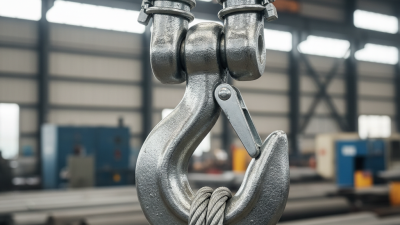
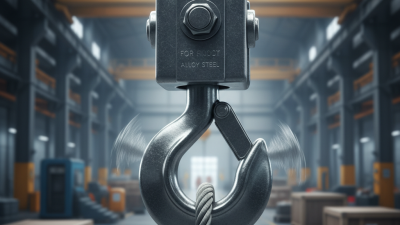
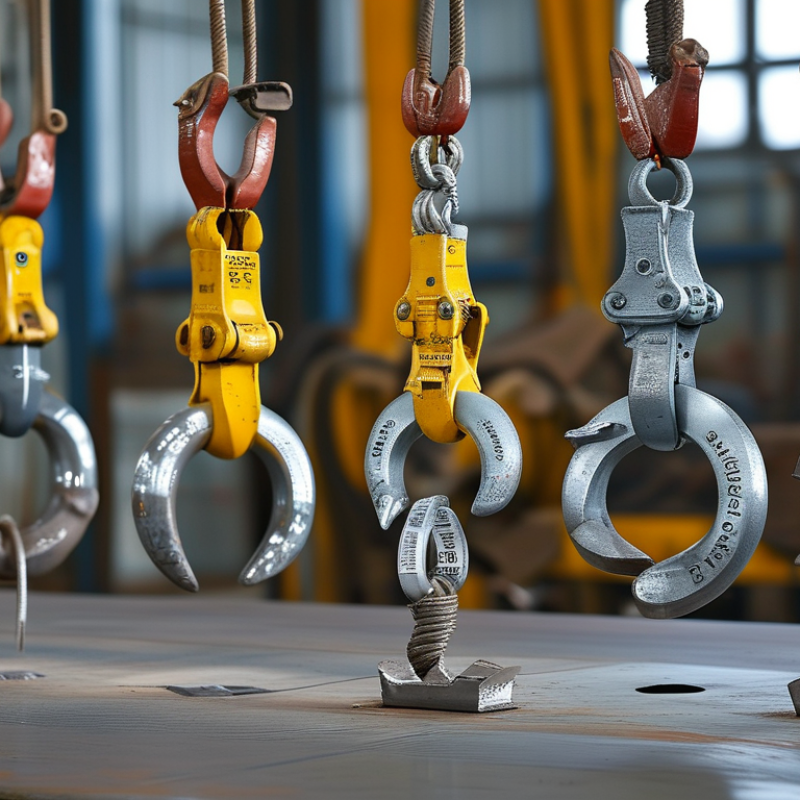
Wire rope eye hooks are lifting hooks with an enclosed eye at the top. The eye connects to a wire rope, sling, or compatible fitting. A latch may close the hook mouth and help prevent accidental release. These hooks are commonly used for lifting machinery, steel frames, timber, and prepared loads in industrial settings.

Their safe use depends on correct selection. Check the working load limit, rope diameter, hook grade, and connection method before lifting. The load should sit deeply in the bowl, not on the tip. Side loading can bend the hook and reduce its strength. In practice, I have seen users focus on hook size but overlook rope angle. That small mistake can change the actual force significantly. Hooks showing cracks, deep wear, deformation, or poor latch movement should be removed from service.

Tips: Match the hook to the rope assembly, not only to the load weight. Inspect the eye, latch, and throat before every lift. Keep the hook aligned with the load. Avoid shock loading, dragging, and sudden starts. Follow the manufacturer’s instructions and applicable lifting standards. Records matter, even when the inspection seems routine. A clear inspection tag can prevent confusion between similar hooks. Always use trained personnel and suitable protective equipment.

How to Evaluate China’s Top Wire Rope Eye Hook Manufacturers

How to Evaluate China’s Top Wire Rope Eye Hook Manufacturers

China’s wire rope eye hook sector serves construction, ports, mining, and material handling. Grand View Research’s 2024 wire rope market analysis forecasts steady global growth through 2030. This suggests strong demand, but demand alone proves little. A reliable manufacturer should provide material certificates, heat-treatment records, and batch-level traceability. Ask for these before comparing prices.

Inspect the hook’s eye, latch, welds, and surface finish. Look for smooth edges, even galvanizing, and no visible cracks. The manufacturer should test proof load and breaking load under recognized standards, such as ASME B30.10 or EN 1677. Request recent laboratory reports, not edited photographs. Check whether the testing laboratory has suitable accreditation. Small details matter.

Manufacturing depth matters too. Review forging equipment, heat-treatment controls, inspection tools, and worker training. ISO Survey data shows ISO 9001 remains widely adopted worldwide, but certification cannot replace product testing. That is an uncomfortable point. Visit the factory, if possible. Compare samples from different batches. Ask about failed tests and corrective actions. A supplier that admits weaknesses may be more trustworthy than one promising perfection. Delivery records, packaging quality, and clear communication also reveal practical reliability.

China Top 10 Wire Rope Eye Hook Manufacturers? - How to Evaluate China’s Top Wire Rope Eye Hook Manufacturers

The following manufacturer-evaluation framework avoids undisclosed company rankings and brand claims. It uses objective product, compliance, quality-control, traceability, and service criteria that can be verified during supplier qualification.

No. Evaluation Dimension Weight Evidence to Request Relevant Technical Benchmark Recommended Scoring Method
1 Applicable Product Standards 15% Current certificates, declarations, product drawings, and test reports identifying the exact hook and wire-rope assembly model. Check the applicable requirements of ASME B30.10 for hooks, ASME B30.9 for slings, ISO 2408 for steel wire ropes, or EN 13414-1 where the product is supplied as a wire-rope sling. Full score when the supplier clearly identifies the applicable standard and provides model-specific evidence rather than general certificates.
2 Rated Capacity and Safety Information 14% Marked working load limit, product datasheet, load-angle limitations, application restrictions, and user instructions. The working load limit must be stated for the complete configuration being sold. A hook or rope component should not be presented as having the capacity of a complete assembly unless the assembly has been evaluated. Full score when capacity markings are permanent, legible, configuration-specific, and consistent across the drawing, label, and test report.
3 Material and Heat-Treatment Control 12% Material certificates, heat-number traceability, chemical composition records, heat-treatment charts, and mechanical-test results. Forged or cast hook materials should be identified by grade and batch. Mechanical properties and heat treatment should be verified against the stated material specification. Full score when each production batch can be traced from incoming material through heat treatment and final inspection.
4 Proof Testing and Load Verification 12% Test procedure, calibrated equipment records, test-force data, acceptance criteria, and batch-level or order-level test certificates. Proof-test requirements depend on the applicable product standard and design. The supplier should state the test load, holding time, acceptance criteria, and whether testing covers the complete assembly. Full score when test records are traceable to the serial number, batch, or purchase order and equipment calibration is current.
5 Dimensional and Functional Inspection 10% Inspection plans covering hook opening, throat dimensions, shank dimensions, latch operation, rope termination, welds, surface defects, and markings. Critical dimensions should be checked against approved drawings and tolerances. Safety latches, if specified, should prevent unintended disengagement without restricting normal loading. Full score when inspection results are recorded for critical dimensions and nonconforming parts are segregated and dispositioned.
6 Wire-Rope Termination Quality 10% Termination method, socketing or swaging procedure, ferrule specifications, operator qualifications, and destructive or visual inspection records. Termination performance depends on the rope construction, termination type, hardware, and process. The manufacturer should provide a documented procedure for the exact rope and fitting combination. Full score when the termination process is validated, documented, and checked for the actual rope diameter and construction supplied.
7 Manufacturing Quality System 9% Quality manual, process-control records, calibration list, internal-audit records, corrective-action reports, and relevant ISO 9001 certification. ISO 9001 certification may demonstrate a documented quality-management system, but it does not by itself prove product compliance or lifting-device capacity. Full score when the quality system is active, scope-relevant, and supported by objective production and inspection records.
8 Traceability and Marking 7% Serial-number or batch-number system, permanent markings, packing-list linkage, material records, and certificate-matching procedure. Traceability should connect the finished hook or assembly with its materials, inspection results, test records, production date, and shipment documentation. Full score when a sample serial number can be followed through the complete document trail without gaps.
9 Surface Protection and Corrosion Control 6% Plating, painting, galvanizing, or coating specification; coating-thickness records; corrosion-resistance test results where relevant; packaging procedure. Surface protection should match the operating environment, storage duration, and handling conditions. Coating appearance alone is not sufficient evidence of corrosion performance. Full score when the finish is specified, inspected, protected during shipment, and suitable for the intended environment.
10 Technical Support and After-Sales Service 5% Installation instructions, inspection guidance, replacement-part availability, complaint procedure, response-time commitment, and product-liability documentation. Users should receive clear instructions for inspection, storage, use, retirement, and damage reporting. For lifting equipment, periodic inspection and removal-from-service criteria are safety-critical. Full score when support documentation is product-specific, multilingual where required, and backed by a defined corrective-action process.

Which 10 Chinese Manufacturers Lead the Wire Rope Eye Hook Market?

Which 10 Chinese Manufacturers Lead the Wire Rope Eye Hook Market?

China’s leading wire rope eye hook manufacturers are distinguished by engineering discipline, not production volume alone. The strongest suppliers usually operate near established lifting-equipment clusters in Jiangsu, Zhejiang, Shandong, and Hebei. They produce forged eye hooks, swaged fittings, and custom assemblies for cranes, marine equipment, construction sites, and industrial handling.

A practical top-ten review should examine each manufacturer’s forging temperature control, heat-treatment records, and proof-load testing. Reliable factories provide material certificates, dimensional reports, and traceable batch numbers. Their hooks commonly use alloy steel, precision-machined eyes, and corrosion-resistant finishes. Some offer automated inspection, while others still depend heavily on skilled workers. That difference matters.

Look closely at thread quality and throat opening.

In my experience, suppliers with clear inspection procedures answer technical questions faster. They also explain working load limits without vague marketing language. However, factory websites can overstate capacity, and public rankings rarely show rejection rates or long-term field performance. Buyers should request sample reports, audit production lines, and compare actual test results. A manufacturer that accepts independent inspection often deserves stronger consideration than one offering only the lowest quotation. Even among the top ten candidates, consistency may vary between batches, so cautious verification remains necessary.

How Do These Manufacturers Compare in Quality, Design, and Certification?

Comparing China’s top ten wire rope eye hook manufacturers requires more than checking catalog photos. In factory audits, I examine forging flow, surface cracks, latch movement, and rope contact points. A reliable hook should have a clear working load limit, not only a breaking load claim. The eye must fit the intended rope diameter without sharp edges. Small details matter.

Design differences often appear in the throat opening, safety latch, galvanizing thickness, and swivel clearance. Some suppliers offer compact hooks for lifting assemblies, while others prioritize wider openings for faster rigging. Stronger does not always mean better. An oversized hook may add weight and reduce handling control. I also compare heat-treatment records, batch traceability, and proof-load testing. These records reveal more than polished marketing language.

Certification separates careful manufacturers from uncertain ones. Useful evidence may include ISO 9001 quality systems, material certificates, load-test reports, and conformity documents for the buyer’s target market. Standards should be named clearly and matched to the product design. A certificate alone proves little if its scope excludes lifting hardware. Ask for current documents and third-party verification. I would also inspect inspection frequency and nonconformance handling. No supplier is flawless. Even a well-designed hook can suffer from inconsistent latch springs or incomplete records. That weakness deserves attention before purchase.

What Should Buyers Check Before Choosing a Chinese Supplier?

Choosing among China’s top 10 wire rope eye hook manufacturers requires more than comparing prices. The International Labour Organization estimated 2.93 million work-related deaths globally each year in its 2023 report. That figure makes load control and supplier verification practical necessities. Ask for the working load limit, safety factor, material grade, heat-treatment records, and dimensional drawings. The hook should match recognized requirements, such as EN 1677 or ASME B30.26, when applicable.

Request batch-specific test reports, not generic certificates. A credible manufacturer can provide proof-load results, hardness readings, chemical composition, and full traceability from steel lot to finished hook. Check whether the testing laboratory is independent and properly accredited. Review thread quality, latch operation, surface finish, and deformation after testing. I have seen polished samples hide inconsistent production. One attractive sample proves very little.

Tips: Order samples from different batches. Measure the throat opening, pin diameter, and latch clearance yourself. Visit the factory, or use an independent inspection company. Confirm packaging, marking, inspection frequency, and replacement procedures in writing. The World Steel Association reported 1.884 billion tonnes of crude steel production in 2023, but abundant steel does not guarantee controlled hook manufacturing. Ask how rejected parts are isolated. Ask again. Reliability often depends on details that sales brochures omit.