Leave Your Message
Choosing a Heavy Duty Cable Sock is a practical decision with consequences beyond the purchase price. It must grip the cable securely, fit its diameter, and withstand the expected pulling load. On site, details matter: mesh length, eye construction, material, and termination can affect handling and service life. A mismatch may mean delays, rework, or damaged cable. Small details count.
The scale of grid investment makes dependable installation equipment increasingly relevant. The International Energy Agency’s Electricity Grids and Secure Energy Transitions report (2023) says annual grid investment must exceed USD 600 billion by 2030 to meet its stated transition pathway. Its report describes grids as “the backbone of clean energy transitions.” IEA Executive Director Fatih Birol has highlighted the need for greater attention and investment in grid infrastructure. This quotation is from the agency’s report, not presented as his personal wording.
For buyers comparing manufacturers in China, price alone is a weak filter. Ask for load-test documentation, material specifications, dimensional tolerances, inspection records, and clear answers about customization. Verify that samples match production drawings. Request evidence for each claim; a polished catalogue is not a test report. Still, paperwork cannot replace checking the finished sock against the cable and job conditions. A useful supplier makes those checks easier, explains limits plainly, and welcomes questions. That standard is demanding, and buyers may not get every answer at once. But unanswered questions should be recorded, not waved away.
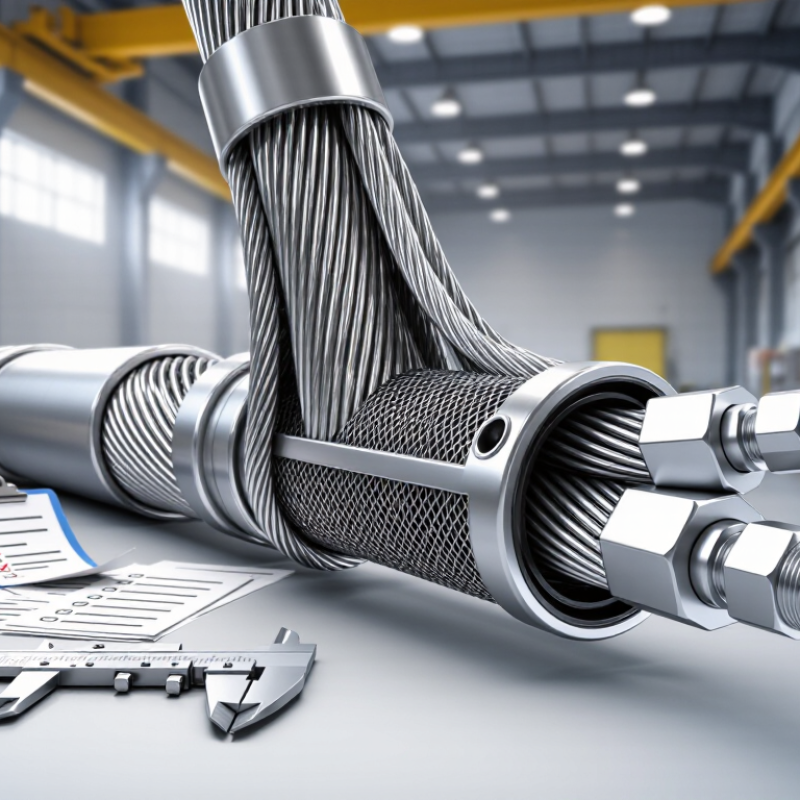
Heavy-duty cable socks are woven pulling grips that hold a cable along a section of its outer jacket. Their mesh tightens under tension, spreading the load more evenly than a narrow clamp. Common designs include single-eye grips for straightforward pulls, double-eye grips for pulling from either end, and lace-up styles for fitting over an installed cable. Split-mesh versions can be useful where connectors prevent sliding a closed grip into place. Small differences matter.
Construction varies by duty. Galvanized steel mesh offers strength for rugged handling, while stainless steel can suit damp or corrosive work areas. Some grips use high-strength synthetic fibers where a lighter, nonmetallic option is needed. Eye fittings, mesh length, and cable diameter all affect fit and handling. A grip that is too loose may slip; one that is too tight can damage the jacket.
These socks are used when routing power, control, and communications cables through conduits, trenches, and equipment spaces. On site, crews should match the grip to the cable diameter, pulling direction, route, and specified load rating. Check the jacket for damage before fitting, and inspect the mesh and eye for wear. A catalog rating can reassure, but it cannot account for every bend, snag, or uneven pull. Practical judgment still matters.
| Cable Sock Type | Typical Construction | Common Applications | Key Selection Considerations |
|---|---|---|---|
| Single-Eye Cable Sock | Woven wire-mesh grip with one end formed into a pulling eye. Common wire options include galvanized steel and stainless steel. | Pulling individual power, control, and communication cables through ducts, conduits, or cable trays. | Match the grip range to the cable’s actual outside diameter. Check eye compatibility with the pulling rope or connector. |
| Double-Eye Cable Sock | Wire-mesh body with a pulling eye at each end, allowing the grip to be connected into a pulling arrangement. | Cable installation setups where connections are required at both ends of the grip, including some long-pull operations. | Confirm the connection method and the manufacturer’s stated working load for the specific grip size and configuration. |
| Lace-Up Cable Sock | Mesh grip with a longitudinal opening secured by lacing wire or an equivalent closure, allowing it to be fitted around a cable. | Retrofitting a grip onto an accessible cable section or using a grip where passing the cable end through a closed mesh is impractical. | Close and secure the lacing according to the product instructions. Verify that the grip sits evenly and does not pinch the cable jacket. |
| Closed-Mesh Cable Sock | Continuous woven mesh sleeve that is pulled over the cable end; tension on the grip tightens the mesh around the cable. | General cable pulling in industrial plants, buildings, utility installations, and infrastructure projects. | Choose a grip length and diameter range suited to the cable. Keep the cable and mesh clean to support an even grip. |
| Offset-Eye Cable Sock | Wire-mesh body with a pulling eye positioned off the cable’s centerline to suit particular connection or routing arrangements. | Installations where an inline eye could interfere with the pulling setup or nearby equipment. | Check the direction of pull and available clearance. An offset eye does not remove the need to observe the rated load and installation guidance. |
| Heavy-Duty Galvanized Steel Cable Sock | Robust woven steel-wire mesh with a galvanized finish; supplied in different grip lengths, diameter ranges, and eye configurations. | Repeated or demanding cable-pulling work in construction, utilities, manufacturing, and other industrial settings. | Inspect for damaged wires, corrosion, or deformation before use. Select by cable diameter and documented load rating, not appearance alone. |
| Stainless Steel Cable Sock | Woven stainless-steel wire mesh, commonly selected when resistance to corrosion is an important service requirement. | Marine, coastal, food-processing, chemical, and outdoor environments, subject to material compatibility and site conditions. | Confirm the stainless-steel grade and compatibility with the environment. Corrosion resistance does not make a grip suitable for every chemical exposure. |
| Multi-Cable Pulling Grip | Mesh arrangement designed to gather and grip more than one cable together; configuration varies by application. | Pulling grouped cables through shared routes where the installation plan permits a combined pull. | Confirm the number and combined outside dimensions of the cables, load distribution, bend limits, and pulling procedure before use. |
Selection note: Cable sock capacity and suitable cable diameter vary by design, material, and manufacturer. Always follow the product’s documented working-load limits and installation instructions, and inspect the grip before use.