Leave Your Message

China Best Wire Rope Swaged Socket Manufacturer?

Choosing the China Best Wire Rope Swaged Socket Manufacturer requires more than comparing prices or polished factory photographs. A reliable supplier should demonstrate controlled swaging, qualified technicians, traceable materials, and repeatable testing. Each Wire Rope Swaged Socket must match the rope diameter, construction, strength, and intended load. Small differences matter. A poorly fitted socket can show cracks, slippage, or uneven deformation before failure becomes visible.

Dr. Rudolf Fey, a respected wire-rope expert, has described wire rope as “a machine.” This short statement offers an important lesson: every socket, sleeve, and termination affects the complete working system. An experienced manufacturer should provide production records, dimensional reports, proof-test data, and clear inspection guidance. Look for evidence from real projects, not only certificates placed on a website. Factory audits can reveal practical details, including die maintenance, surface cleaning, operator training, and storage conditions. Those details often decide long-term performance.

The best supplier is not automatically the largest one. It is the manufacturer that understands application risk and communicates limitations honestly. Offshore lifting, mining equipment, cranes, and architectural structures may require different designs and testing procedures. A responsible supplier will ask questions before recommending a product. That is good practice.

There is no perfect shortcut. Buyers must still verify standards, working load limits, corrosion protection, and inspection intervals with competent professionals. This guide examines how to compare Chinese manufacturers, assess technical credibility, and select a Wire Rope Swaged Socket supplier with dependable engineering and production experience.
China Best Wire Rope Swaged Socket Manufacturer?

What Is a Wire Rope Swaged Socket?

What Is a Wire Rope Swaged Socket?

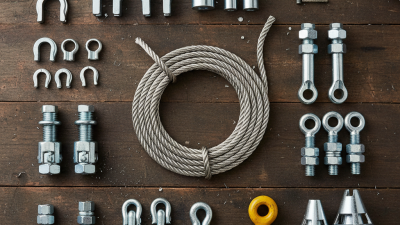
A wire rope swaged socket is a permanent termination fitting for wire rope. It connects the rope to lifting, rigging, or structural equipment. During installation, the rope enters a tapered socket. A hydraulic press then compresses the socket around the rope. This creates a firm mechanical connection without knots or temporary clamps. The socket and rope must match in diameter, construction, and rated capacity. A small mismatch can reduce performance. It may look harmless, but it is not.

Reliable installation depends on controlled pressure, correct dies, and trained inspection. The rope should sit at the required depth, with no crushed strands or visible gaps. Inspectors should check the socket body, rope tail, pin area, and signs of movement. Corrosion, distortion, or unusual wire damage requires careful evaluation. Do not judge security by appearance alone. That is an easy mistake. A manufacturer’s technical data and an appropriate proof test provide stronger evidence than visual confidence. Actual working conditions also matter, including angle, vibration, shock loading, and repeated movement.

Tips: Clean the rope before assembly. Mark the rope near the socket to detect slipping. Use calibrated swaging equipment. Record installation details and inspection dates. If the fitting feels uncertain, stop and request qualified technical advice. A slower decision is often the safer one.
How Are Swaged Sockets Designed and Manufactured in China?

China Best Wire Rope Swaged Socket Manufacturer?

How are swaged sockets designed and manufactured in China? The process begins with the rope diameter, construction, grade, and required working load. Engineers calculate the socket body, eye thickness, and swaging allowance together. A small mismatch can reduce holding strength.

China produced about 1.019 billion tonnes of crude steel in 2023, according to World Steel Association statistics. This large production base supports controlled sourcing for carbon steel and alloy steel sockets. However, volume does not guarantee quality. Reliable factories verify heat numbers, chemical composition, and mechanical properties before machining. The socket cavity must match the rope closely. Sharp edges are removed to prevent strand damage.

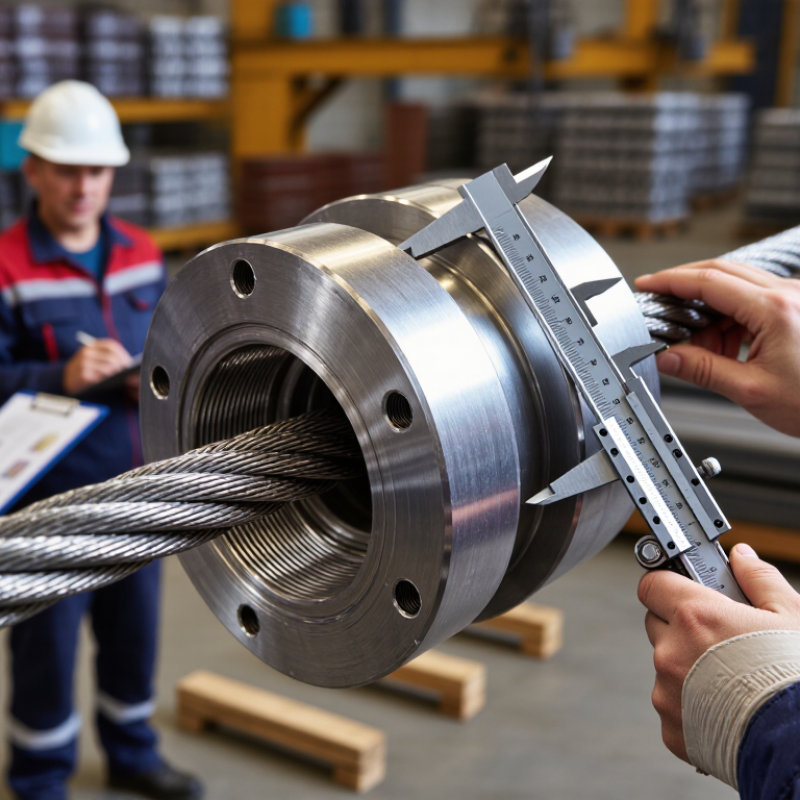
Manufacturing usually includes forging or precision casting, CNC machining, drilling, surface treatment, and hydraulic swaging. Technicians measure socket dimensions with calibrated gauges. They also inspect rope insertion depth and swage diameter after pressing. ISO 7531 provides guidance for socketed wire rope assemblies, while ISO 4309 supports inspection practices for ropes in service. Batch testing should include visual checks, dimensional records, and proof-load testing based on the specified application.

Real workshop experience still matters. Uneven die pressure can leave marks or hidden deformation. Not perfect every time. A mature supplier reviews failed samples, adjusts tooling, and records corrective actions. Traceable certificates, operator training, and independent test reports make the manufacturing process more dependable.

China Best Wire Rope Swaged Socket Manufacturer? - How Are Swaged Sockets Designed and Manufactured in China?
Category Design or Manufacturing Parameter Typical Technical Data Why It Matters Relevant Standard or Practice
Application Common use Fixed-end termination for steel wire ropes used in lifting, marine, offshore, construction, and industrial equipment Transfers rope tension to a clevis, pin, shackle, or other structural connection Application-specific lifting and wire-rope regulations
Socket Type Typical configurations Open swaged socket, closed swaged socket, and socket assemblies with pin or clevis connection The configuration is selected according to connection geometry, load direction, and available clearance EN 13411-8 and applicable customer specifications
Rope Compatibility Nominal rope diameter Common engineering sizes: approximately 6 mm to 60 mm; larger sizes require project-specific tooling and verification Socket bore, cavity length, and swaging reduction must match the actual rope construction and diameter Wire-rope manufacturer data and termination design requirements
Rope Strength Common rope tensile grades Typical nominal tensile strengths include 1,570 N/mm², 1,770 N/mm², 1,960 N/mm², and 2,160 N/mm² Socket capacity must be evaluated against the rope’s minimum breaking force, not diameter alone ISO 2408 and the specified wire-rope construction
Socket Material Body material selection Usually forged or cast carbon steel, alloy steel, or corrosion-resistant steel selected for the required load and environment Material strength, toughness, fatigue resistance, and corrosion performance directly affect service life Material certificates and project-specific mechanical requirements
Manufacturing Primary production sequence Engineering design → material cutting → forging or casting → heat treatment → machining → surface treatment → inspection A controlled process reduces dimensional variation and improves repeatability between production batches Documented manufacturing and quality-control procedures
Swaging Process Cold radial compression Multiple controlled radial blows or compressive passes form the socket around the rope end Correct reduction produces mechanical interlock and limits rope slippage without damaging the wires Approved swaging procedure and calibrated production equipment
Dimensional Control Critical dimensions Socket bore, overall length, eye or clevis dimensions, pin-hole diameter, concentricity, and swaged profile Accurate dimensions ensure correct assembly and prevent uneven loading at the connection point Approved drawings, inspection plans, and calibrated measuring tools
Heat Treatment Mechanical-property control Normalizing, quenching and tempering, or other qualified treatment may be used depending on the steel grade and design load Balances tensile strength, impact toughness, hardness, and resistance to brittle failure Specified material grade and heat-treatment records
Surface Protection Corrosion-control options Hot-dip galvanizing, electro-galvanizing, paint systems, or other specified protective coatings Protection is especially important for outdoor, coastal, marine, and offshore service Coating specification, environmental exposure class, and inspection requirements
Load Verification Proof-load testing Test force is established by the applicable standard, working-load limit, rope strength, and customer specification; it is not a universal percentage Confirms the termination can withstand the specified service load without unacceptable movement or damage EN 13411-8, lifting regulations, and approved test procedures
Inspection Typical quality checks Visual inspection, dimensional inspection, hardness testing, material verification, non-destructive testing, and proof-load testing when required Detects cracks, laps, incomplete swaging, incorrect dimensions, and material inconsistencies Inspection and test plan agreed before production
Traceability Product identification Part number, batch number, material heat number, rope diameter, rated capacity, and inspection status where required Supports quality audits, replacement control, and investigation of service issues Customer documentation and quality-management procedures
Documentation Recommended supply records Approved drawing, material certificate, heat-treatment record, dimensional report, coating report, test certificate, and conformity statement Provides evidence that the socket conforms to the agreed technical and inspection requirements Contract documentation and applicable conformity requirements
Selection Key purchasing criteria Rope construction, nominal diameter, minimum breaking force, working-load limit, environment, connection size, standard, testing, and traceability A socket should be selected as part of a complete rope-termination system rather than as an isolated component Qualified engineering review before installation and service

What Materials and Standards Define Product Quality?

China Best Wire Rope Swaged Socket Manufacturer?

Product quality begins with the metal, not the polished finish. A dependable swaged socket usually uses forged carbon steel or alloy steel with controlled chemistry. Alloy steel can improve strength and fatigue resistance. Stainless steel suits corrosive environments, but it may not match every lifting requirement. The material certificate should identify the grade, heat number, tensile strength, and heat-treatment results. Traceability matters.

Standards define how those materials become safe terminations. A qualified manufacturer should state the applicable standard, such as EN 13411-4 for metal socketing, and explain its testing method. Dimensional checks, hardness testing, visual inspection, and proof-load testing should be documented. The socket must match the rope diameter precisely. A small mismatch can create uneven loading and premature wire damage. Certificates alone are not enough.

During inspection, look for clean forging lines, consistent bore dimensions, and smooth transitions around the socket eye. Sharp edges are a warning sign. Coatings should resist corrosion without hiding cracks or poor machining. A reliable supplier should offer batch records, inspection reports, and clear installation instructions. Ask how failed samples are handled. That answer reveals manufacturing discipline.

A bright surface can mislead. No inspection process is perfect. Human mistakes still occur during swaging, measurement, or record keeping. Suppliers that admit these risks and show corrective actions are usually more trustworthy. The best evaluation combines material evidence, standard compliance, factory controls, and practical load-test data.

How to Evaluate China’s Best Swaged Socket Manufacturer

Evaluating China’s best swaged socket manufacturer requires more than comparing prices. Start with production evidence. Ask whether the socket body is forged from specified steel and whether each batch includes material certificates. Review the swaging process, dimensional controls, and traceability records. A reliable factory should explain how it checks socket alignment, rope fit, and surface defects. Clear answers matter.

Request independent test reports for tensile strength, proof load, and fatigue performance. Inspect sample sockets closely. Look for clean machining, consistent wall thickness, and a smooth rope entry. Ask for drawings showing tolerances and connection dimensions. During a factory audit, observe calibration labels and testing equipment, not only finished products. A polished catalog can mislead. Real quality appears in records and repeatable results.

Tips: Send the manufacturer your actual rope diameter, load range, environment, and installation method. Test samples before approving mass production. Confirm packaging, marking, inspection plans, and replacement procedures in writing. Communication speed is useful, but technical accuracy matters more. Some buyers focus too heavily on the lowest quotation; that choice may increase inspection costs later. I would also recheck assumptions, because a suitable socket for dry indoor lifting may perform poorly near saltwater or constant vibration.

Which Industries Use Wire Rope Swaged Sockets?

Which Industries Use Wire Rope Swaged Sockets?

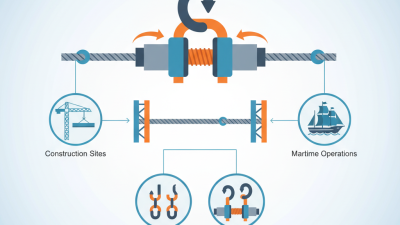
Wire rope swaged sockets serve construction, mining, marine transport, offshore energy, elevators, and heavy lifting. They create compact terminations where space and load control matter. On a job site, workers may use them on cranes, guy lines, lifting frames, or permanent supports. The Global Wind Energy Council reported about 11 GW of new offshore wind capacity in 2023. Each project demands reliable rigging around towers, vessels, and installation equipment. That growth increases the need for carefully engineered terminations.

Ports and shipyards also depend on them. UNCTAD’s Review of Maritime Transport 2024 reported global maritime trade growth of 2.4% in 2023. More cargo movement means more crane cycles, harsh salt exposure, and repeated rope loading. Mining operations add dust, vibration, and sudden shock. These conditions can hide small socket defects. In practice, correct rope diameter, socket alignment, swaging pressure, and proof testing matter more than appearance. A polished fitting is not automatically a safe fitting. That assumption needs challenging.

Tips: Match the socket to the rope construction and certified working load. Inspect for cracks, rope slip, corrosion, and distorted eyes before use. Follow ISO 2408, ASME B30.9, and the manufacturer’s approved swaging procedure. Keep traceable inspection records. Field conditions often differ from design assumptions, so engineers should review temperature, bending, lifting angles, and chemical exposure before approval.