Leave Your Message

How to Find the Best Wire Rope Shackle Supplier in China?

Finding a reliable Wire Rope Shackle supplier in China requires more than comparing online prices. The right partner should demonstrate manufacturing experience, technical knowledge, and consistent quality control. A polished website is not enough. Ask about factory capabilities, material grades, production records, and inspection procedures before discussing large orders.

A dependable supplier should provide clear specifications for working load limits, shackle dimensions, pin design, surface treatment, and applicable testing standards. Request recent load-test reports, material certificates, product photographs, and traceability documents. If possible, arrange a factory audit or use an independent inspection company. Small details matter. Check how finished shackles are marked, packed, stored, and protected from corrosion. These details often reveal how seriously a manufacturer manages quality.

Communication also deserves careful attention. A professional supplier should answer technical questions directly and explain limitations without making exaggerated claims. Confirm sample approval, production lead time, packaging requirements, replacement policies, and shipping responsibilities in writing. The lowest quotation may hide inconsistent materials, weak documentation, or unstable production. That risk is easy to underestimate. Even a careful checklist can miss problems when buyers rely only on product photos. A second review is worthwhile.

This guide explains how to compare Chinese suppliers using practical evidence rather than promotional language. It considers factory verification, product testing, supplier communication, and long-term reliability. No supplier search is flawless. However, disciplined questions and independent checks can reduce uncertainty and support a safer purchasing decision.
How to Find the Best Wire Rope Shackle Supplier in China?

Define Your Wire Rope Shackle Requirements and Safety Standards

The best wire rope shackle supplier starts with a precise requirement, not a low quotation. Define the working load limit, wire rope diameter, shackle shape, pin type, and lifting direction. State whether the shackle will face saltwater, mud, heat, or repeated loading. Small details matter. A bow shackle may suit multi-directional loads, while a straight shackle often fits aligned lifting points better.

Separate working load limit from breaking load. Never treat them as interchangeable. Ask suppliers to provide material grade, heat-treatment records, batch numbers, dimensional drawings, and test certificates. Requirements should reference recognized standards, such as ASME B30.26 or EN 13889, where applicable. ISO 2415 also provides guidance for forged shackles and their mechanical properties. The International Labour Organization reported 2.93 million work-related deaths worldwide in 2019, showing why lifting hardware deserves disciplined control.

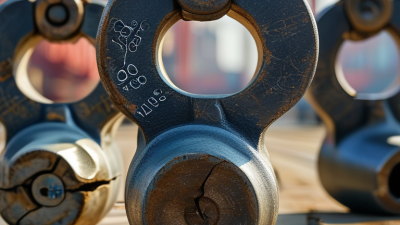
The supplier should explain proof testing, marking durability, inspection intervals, and rejection criteria. Request sample photographs showing the stamped WLL and traceability code. Then verify those details against the certificate. A document alone is not proof. During evaluation, ask how the supplier handles cracks, bent pins, corrosion, or missing markings. I would also inspect a production sample before placing a large order. This step costs time, but skipping it can hide poor thread finishing or uneven coating. One overlooked issue is temperature: ordinary specifications may not cover cryogenic or high-heat service. Recheck that assumption.
How to Find the Best Wire Rope Shackle Supplier in China? - Define Your Wire Rope Shackle Requirements and Safety Standards

Requirement Category Recommended Requirement Practical Acceptance Criteria Verification Documents Safety Relevance
Working Load Limit (WLL) Select a WLL equal to or greater than the maximum intended load, including the effect of sling angle and load distribution. The required WLL must be permanently marked on the shackle body. Do not use the breaking load as the working load. Technical drawing, product data sheet, marked-product photographs, load-rating chart. Prevents overload and supports correct lifting-plan calculations.
Applicable Safety Standard Specify the standard required by the destination market and application, such as ASME B30.26 or EN 13889 where applicable. The supplier must identify the exact edition, product scope, and clauses used for design, marking, inspection, and testing. Declaration of conformity, standard-compliance statement, test procedure, and inspection plan. Reduces ambiguity and ensures the product matches legal and industry requirements.
Shackle Type Choose bow shackles for multi-directional loading and dee shackles for more in-line loading applications. The selected type must match the connection geometry, sling eye, wire-rope termination, and expected load direction. Dimensional drawing, application guide, and approved use instructions. Minimizes side loading, instability, and accidental disengagement.
Material and Heat Treatment Use suitable forged alloy steel with controlled heat treatment for the specified WLL and service environment. Material grade, mechanical properties, hardness range, and heat-treatment condition must be traceable to the production batch. Material certificate, heat-treatment record, and batch traceability report. Supports resistance to deformation, fatigue, and brittle failure.
Pin Design and Retention Specify a pin type suitable for the application, such as screw pin, bolt-type, or safety-type configuration. The pin must be fully compatible with the body, correctly sized, resistant to unintended loosening, and replaceable only with an approved part. Assembly drawing, pin material certificate, torque guidance, and replacement-part specification. Prevents pin loss and unintentional opening during service.
Proof Testing Require proof testing according to the selected standard, purchase specification, and product class. The test load, duration, acceptance criteria, equipment calibration, and sampling plan must be stated. A 2.0 × WLL proof load is common for many rated shackles, but the governing standard must be confirmed. Individual or batch proof-test certificate, calibrated equipment record, and test report. Confirms structural performance before the product enters service.
Dimensions and Tolerances Define body diameter, bow or dee width, pin diameter, opening, throat clearance, and connection-hole size. Critical dimensions must comply with the approved drawing and allow adequate clearance without forcing the wire-rope eye or fitting. Controlled drawing, dimensional inspection report, and first-article inspection record. Prevents point loading, misalignment, and unsafe assembly.
Wire Rope Compatibility Match the shackle opening and pin diameter to the wire-rope diameter, end termination, thimble, and socket configuration. The wire rope must seat smoothly in the bow or thimble without sharp bending, crushing, or contact with unapproved edges. Compatibility chart, assembly instructions, and application photographs or diagrams. Protects the wire rope from localized damage and premature fatigue.
Marking and Traceability Require permanent identification of WLL, size, material or grade, standard reference where required, and batch or trace code. Markings must remain legible after normal handling and correspond to the certificate and production records. Marking layout, traceability procedure, certificate, and sample inspection record. Enables identification, inspection, recall, and correct selection in the field.
Surface Protection Select a finish suitable for indoor, outdoor, marine, offshore, or chemically exposed service. Define coating type, coating thickness, corrosion-resistance test requirement, and areas that must remain free of coating. Coating specification, thickness report, corrosion-test report, and visual inspection record. Reduces corrosion-related loss of cross-section and seizure of the pin.
Non-Destructive Examination Consider magnetic-particle or other suitable non-destructive testing for forged load-bearing components. Inspection method, coverage, acceptance level, inspector qualification, and sampling frequency must be defined before production. NDT procedure, personnel qualification record, inspection report, and calibration records. Helps identify surface or near-surface cracks that may not be visible.
Factory Quality System Prefer a documented quality-management system with controlled purchasing, production, inspection, and nonconformance procedures. The supplier should permit document review, sample approval, corrective-action follow-up, and pre-shipment inspection. Quality certificate, process flow, inspection plan, audit report, and corrective-action records. Improves consistency between production batches.
Inspection Before Shipment Set a written inspection and acceptance plan covering dimensions, markings, finish, accessories, certificates, and packaging. Use agreed sampling levels or 100% inspection for safety-critical characteristics, based on risk and order quantity. Pre-shipment inspection report, approved sample record, photographs, and packing list. Detects nonconforming products before installation or use.
Operating Environment State ambient temperature, humidity, salt exposure, chemicals, shock loading, vibration, and lifting frequency. Supplier must confirm allowable temperature range, corrosion limitations, lubrication requirements, and any restrictions on dynamic loading. Installation manual, environmental limitations, maintenance schedule, and risk assessment. Ensures the selected shackle is suitable for actual service conditions.
Inspection and Retirement Criteria Require clear criteria for wear, deformation, cracks, corrosion, damaged threads, illegible markings, and pin defects. The user manual must state when the shackle must be removed from service and how inspections should be recorded. User manual, inspection checklist, maintenance instructions, and rejection criteria. Supports continued safe use throughout the product life cycle.
Important purchasing note: WLL, proof-test load, minimum breaking force, dimensions, and acceptance criteria vary by product design and governing standard. Confirm the exact requirements in the approved technical specification before placing an order.

Research Qualified Wire Rope Shackle Suppliers in China

How to Find the Best Wire Rope Shackle Supplier in China?

Research Qualified Wire Rope Shackle Suppliers in China

Begin with documented production evidence, not attractive catalog photos. The World Steel Association reported 1.88 billion tonnes of crude steel production worldwide in 2023. That scale makes material traceability essential. Ask suppliers for heat numbers, mill certificates, and batch records. Verify whether each shackle matches EN 13889, ASME B30.26, or another required standard. The supplier should explain clearly.

Request recent proof-load and breaking-load test reports. Check the laboratory name, equipment calibration date, test force, and product batch. A useful factory audit should include forging, heat treatment, machining, marking, and final inspection. Look closely at thread quality and pin engagement. Small defects matter.

The U.S. Bureau of Labor Statistics recorded 1,069 fatal workplace injuries in transportation and material-moving occupations in 2023. This figure does not prove a shackle caused an incident. It does show why lifting hardware deserves careful sourcing. Ask for photos of marked working load limits and packaging labels. Confirm inspection procedures through a video call or independent inspection. I would not rely on one certificate alone. Paperwork can be complete while process control remains weak. Compare three suppliers using the same checklist, then test samples under realistic conditions, including corrosion exposure and repeated loading.

Verify Factory Capability, Certifications, and Quality Control

Choosing a wire rope shackle supplier in China requires more than comparing prices. Check whether the factory actually forges, heat-treats, tests, and inspects its own products. The ISO Survey 2023 recorded more than 1.2 million ISO 9001 certificates worldwide, but certification alone proves little. Confirm the certificate’s scope, issuing body, validity, and factory address.

Ask for production evidence. A capable factory should show forging equipment, controlled heat-treatment records, calibrated load-test machines, and trained inspectors. Request material certificates with heat numbers, not generic declarations. The World Steel Association reported about 1.89 billion tonnes of crude steel production in 2023. That scale makes raw-material traceability essential. Paper is not performance.

Quality control should cover incoming steel, dimensions, thread condition, hardness, proof loading, and final marking. Compare the supplier’s procedures with applicable standards, such as ASME B30.26 or EN 13889. Request recent test reports from an accredited laboratory, plus calibration records for testing equipment. Visit the factory if possible. During one audit, a clean inspection room impressed me, but missing batch links weakened the evidence. That detail mattered. Ask for corrective-action records, sampling plans, and photos showing the same product throughout production. A supplier may pass a sample test while controlling routine batches poorly. Evidence must connect the certificate, material, process, inspection, and delivered shackle.

Compare Materials, Prices, Minimum Orders, and Lead Times

How to Find the Best Wire Rope Shackle Supplier in China?

Choosing a wire rope shackle supplier requires more than comparing one unit price. Start with material. Forged alloy steel suits lifting applications requiring high strength and impact resistance. Stainless steel works better in corrosive marine or outdoor environments. Galvanized steel can reduce corrosion costs, but coating quality varies. Ask for material certificates, heat-treatment records, proof-load results, and clear working load limits. A reliable supplier should explain these details without avoiding technical questions.

Prices should include more than the factory quotation. Check tooling, packaging, inspection, inland transport, and shipping charges. A cheaper shackle may have rough threads, uneven galvanizing, or weak markings. I once focused too heavily on the lowest price. The later inspection cost erased the savings. That mistake still matters. Request samples before placing a large order, and compare dimensions with the approved drawing.

Minimum order quantities also affect risk. A small trial order may cost more per piece but protects cash flow. Ask whether the supplier accepts mixed sizes or staged shipments. Lead times need equal attention. Confirm production time, testing time, port handling, and a realistic shipping buffer. A supplier promising seven days may simply be guessing. Request a written schedule with inspection dates and packaging photos. Keep communication records, because small details often expose larger reliability problems.

How to Find the Best Wire Rope Shackle Supplier in China?

Comparison of common shackle materials, indicative prices, minimum order quantities, and lead times

Carbon steel shackles generally offer the lowest unit price and shortest production time, while G80 alloy steel provides higher strength for lifting applications. Stainless steel 316 is suitable for corrosive or marine environments but normally has a higher price and longer lead time. The figures are practical planning benchmarks for standard export orders and should be confirmed with suppliers according to size, working load limit, certification, packaging, and customization requirements.

Confirm Samples, Contracts, Shipping, and After-Sales Support

Finding the best wire rope shackle supplier in China starts with a physical sample, not a polished catalog. Request samples matching the intended working load limit, dimensions, pin design, and surface finish. Check the shackle by hand for sharp edges, uneven coating, loose threads, and unclear markings. Ask for material information and a load-test report from a qualified inspection process. A sample may look perfect yet reveal weak documentation. That small concern deserves attention.

The contract should describe every important detail: model, size, working load limit, quantity, tolerance, packaging, inspection method, delivery date, and payment terms. Include rules for defective products and replacement costs. Specify whether an independent inspection is allowed before shipment. I would also request photos of packed cartons, the packing list, commercial invoice, and shipping marks before loading. Confirm the agreed trade terms and transport responsibility in writing. One overlooked sentence can create an expensive dispute.

After-sales support should be measurable, not merely promised. Ask who handles technical questions, how quickly replies are expected, and what evidence is needed for a claim. Reliable suppliers can trace production batches and explain inspection records. Test their response with a practical question before ordering. Slow answers are a warning. Still, no supplier is flawless; even careful factories can miss a detail. The real test is whether they admit it, investigate the cause, and offer a documented remedy.